Silk Screen vs. Sublimation: Which Printing Method Is Right for Your Custom Mugs?
- Share
- Issue Time
- Jul 23,2026
Summary
Choosing between silk screen printing and sublimation for your custom mugs? This detailed comparison covers process, durability, design flexibility, cost, and application scenarios for both methods. Includes a comprehensive comparison table and product recommendations.

Table of Contents
1. Overview of Silk Screen and Sublimation Printing
When it comes to customizing ceramic mugs for corporate branding, promotional events, retail merchandise, or hospitality use, selecting the right printing method is one of the most consequential decisions a buyer can make. The two most widely adopted techniques in the industry are silk screen printing and sublimation printing. Each method has distinct advantages, limitations, and ideal application scenarios that directly affect the final product quality, cost efficiency, and production timeline. Understanding the fundamental differences between these two approaches is essential for procurement managers, marketing professionals, and business owners who want to ensure their custom mug project delivers the intended return on investment.
Silk screen printing, also known as screen printing or screen mesh printing, is a traditional technique that has been used in ceramic decoration for decades. The process involves creating a fine mesh screen stretched tightly over a frame. A stencil is applied to the screen to block out areas where ink should not pass through. Ink is then placed on top of the screen and a squeegee is used to press the ink through the open mesh areas onto the surface of the mug. The ink is deposited in a controlled layer, and the mug is then passed through a curing oven or drying tunnel to set the ink permanently. When applied as an under-glaze decoration, the ink becomes fused with the ceramic glaze itself, creating a bond that is extraordinarily resistant to wear, washing, and fading over time.
Sublimation printing, by contrast, is a more modern digital transfer technique that relies on heat and pressure to infuse dye into a specially coated surface. The process begins with a digital design file that is printed onto transfer paper using specialized sublimation inks. These inks are formulated to transform from a solid state directly into a gas state when exposed to high temperatures, bypassing the liquid phase entirely. This physical phenomenon is called sublimation. The printed transfer paper is wrapped around the mug and secured with heat-resistant tape. The wrapped mug is then placed into a heat press machine that applies both high temperature and pressure. Under these conditions, the sublimation inks vaporize and penetrate the polymer coating of the mug, where they bond at a molecular level. When the mug cools, the dye reverts to a solid state, now permanently embedded within the coating layer.
Both methods have earned their place in the custom mug manufacturing industry, but they serve distinctly different project requirements. Silk screen printing excels in applications where durability, color consistency across large runs, and specific Pantone color matching are critical. Sublimation printing dominates in scenarios where photographic quality, unlimited color gradients, and complex artwork are required. The choice between these two methods ultimately depends on the specific goals of the project, the design complexity, the budget available, and the quantity of mugs being produced. This guide provides a thorough comparison across all relevant dimensions so that buyers can make an informed decision with confidence.
2. Process Comparison: How Each Method Works
The production workflow for silk screen printing is methodical and requires several preparatory steps before the first mug can be decorated. The process begins with artwork preparation, where the design is separated into individual color layers. Each color in the design requires a separate screen, so a design with three colors will need three distinct screens. The screens are created by coating a fine mesh fabric with a light-sensitive emulsion. The color-separated artwork is printed onto transparent film, which is then placed over the coated screen and exposed to ultraviolet light. The areas of emulsion that are not protected by the design harden, while the areas corresponding to the design remain soluble and are washed away, leaving open mesh through which ink can pass. This screen preparation step is critical and requires precision, as any imperfection in the screen will be reproduced on every mug in the production run.
Once the screens are prepared, the production line is set up. For cylindrical mugs, the printing is typically done using a semi-automatic or automatic screen printing machine that rotates the mug as the squeegee applies the ink. Each color is applied sequentially, and the mug must be positioned accurately for each color to ensure proper registration. After all colors have been applied, the mugs move through a drying tunnel or curing oven where the ink is thermally set. For under-glaze applications, the printed mugs are fired in a kiln at high temperatures, which causes the ink to fuse with the ceramic glaze. This firing process is what gives under-glaze silk screen printing its legendary durability. The entire process from screen preparation to finished product can take several days, depending on the number of colors and the complexity of registration.
Sublimation printing follows a significantly different workflow that is generally faster for prototype development and small to medium production runs. The process starts with a digital design file created in graphic design software. Because sublimation is a digital printing process, there is no limit to the number of colors or the complexity of gradients in the design. The design is printed onto high-release sublimation transfer paper using a dedicated sublimation printer equipped with specially formulated sublimation inks. These printers use piezo-electric print heads that precisely deposit micro-droplets of ink onto the paper. The printed transfer paper must be allowed to dry completely before the transfer process begins.
The transfer stage involves wrapping the dried sublimation paper around the mug with the printed side facing the mug surface. The paper is secured with heat-resistant tape that can withstand temperatures of up to 400 degrees Fahrenheit without leaving adhesive residue. A protective Teflon sleeve or wrap is often placed over the paper to ensure even pressure distribution. The wrapped mug is then placed into a mug heat press, which is a specialized machine designed with a cylindrical heating element that conforms to the shape of the mug. The heat press applies both temperature and pressure for a specific duration, typically between 180 and 220 seconds at 380 to 400 degrees Fahrenheit. During this time, the sublimation inks transition directly from a solid to a gaseous state. The gas molecules penetrate the porous polymer coating of the mug and become trapped when the coating cools and re-solidifies. After the press cycle is complete, the mug is removed and allowed to cool. The transfer paper is then peeled away, revealing a vibrant, permanent image that is fully integrated into the mug surface.
One of the key differences in the process is the turnaround time for samples. Sublimation allows for rapid prototyping because no screens need to be created. A design can be printed and transferred to a mug within minutes. Silk screen printing, on the other hand, requires screen creation before any sample can be produced, which adds both time and cost to the sampling phase. However, once the screens are prepared and the production line is running, silk screen printing can achieve very high throughput rates, making it more efficient for large-scale production runs. The choice between these two workflows should be guided by the project timeline, the need for samples, and the anticipated production volume.
3. Durability and Wear Resistance
Durability is often the single most important factor for buyers who are sourcing custom mugs for long-term use, especially in hospitality, corporate gift programs, and retail environments where products must withstand repeated handling and washing. Silk screen printing, when applied as an under-glaze decoration, offers the highest level of durability available in ceramic mug decoration. The key to this durability lies in the firing process. When the ink is applied to the mug before the final glaze firing, or when the ink is applied over the glaze and then fired again at a lower temperature, the ink becomes physically fused with the ceramic surface. This creates a bond that is not merely a surface coating but an integral part of the mug itself.
Under-glaze silk screen printing is exceptionally resistant to abrasion, scratching, and chemical degradation. The design will not peel, crack, or fade even after thousands of cycles in commercial dishwashers. The ink is protected by the glass-like glaze layer, which shields it from physical contact and chemical exposure. This makes under-glaze silk screen printing the preferred choice for high-end hospitality establishments, restaurant chains, and hotels where mugs are subjected to industrial washing conditions on a daily basis. The durability of under-glaze decoration is so reliable that many manufacturers offer extended warranties on this type of decoration, confident that the design will remain intact for the entire useful life of the mug.
Over-glaze silk screen printing, where the ink is applied on top of the already-fired glaze and then fired at a lower temperature, offers slightly less durability than under-glaze but is still highly resistant to normal wear. The ink forms a thin layer on top of the glaze that is durable enough for regular hand washing and moderate dishwasher use. However, over time and with repeated exposure to harsh detergents and high-temperature wash cycles, over-glaze designs may begin to show subtle signs of wear. For most corporate and promotional applications, over-glaze silk screen printing provides more than adequate durability at a lower production cost than under-glaze.
Sublimation printing offers a different type of durability. Because the dye is infused into the polymer coating of the mug at a molecular level, the design cannot be scratched off from the surface. The image is embedded within the coating layer, not sitting on top of it. This means that under normal handling conditions, sublimated designs are highly resistant to scratching and abrasion. The image will not peel or flake because there is no surface layer of ink to separate from the mug. For everyday use including hand washing and occasional dishwasher use, sublimation printing provides excellent durability that satisfies most corporate and consumer applications.
However, sublimation printing has some important limitations regarding long-term durability. The polymer coating that receives the sublimation dye can degrade over time when exposed to extreme temperatures, especially in commercial dishwashers that operate at very high temperatures. Repeated exposure to high heat can cause the coating to break down, which may lead to gradual fading of the image. Additionally, sublimated mugs are not suitable for microwave use in many cases, as the polymer coating can be damaged by the intense localized heating that occurs in microwave ovens. The coating itself is also subject to chemical degradation if exposed to harsh cleaning agents over extended periods. Buyers who need mugs that will withstand commercial dishwashing conditions for years should consider the durability limitations of sublimation carefully and may find that under-glaze silk screen printing is the more appropriate choice for their application.
4. Design Flexibility and Color Capabilities
The design capabilities of silk screen printing and sublimation printing differ dramatically, and this difference is often the deciding factor for buyers whose artwork requirements fall outside the capabilities of one method or the other. Silk screen printing is fundamentally a color-separated process. Each color in the design must be printed separately using a dedicated screen, which places practical limits on the number of colors that can be used in a single design. Most commercial silk screen operations for mugs can accommodate up to four to six colors efficiently, though more colors are possible with additional screens and setup time. Each additional color adds to the setup cost, the production time, and the complexity of registration, which is the precise alignment of each color layer.
One of the significant advantages of silk screen printing is its ability to achieve precise Pantone color matching. Pantone is a standardized color matching system that allows brands to specify exact colors for their logos and designs. Silk screen inks can be custom-mixed to match specific Pantone colors with a high degree of accuracy. This is particularly important for corporate branding projects where color consistency across all branded materials is essential. A company logo that uses a specific shade of blue or red must be reproduced exactly on every mug in the production run, and silk screen printing delivers this consistency reliably. The ink is applied in a thick, opaque layer that provides excellent coverage, even on dark-colored mug surfaces, and the color remains consistent across the entire production run.
Silk screen printing is best suited for designs that use solid colors, bold graphics, and simple typography. Gradients, photographic images, and subtle color transitions are difficult to achieve with silk screen because each color must be applied as a separate solid layer. Halftone techniques can simulate gradients to some extent, but the results are not comparable to the continuous tone quality of photographic printing. Designs with fine details, small text, or intricate patterns may also present challenges in silk screen printing, as the mesh of the screen imposes a minimum resolution on the printed image. For designs that are primarily text-based or use simple geometric shapes with a limited color palette, silk screen printing produces excellent results with high consistency and vibrant color saturation.
Sublimation printing, being a digital process, imposes virtually no limitations on design complexity. Because the design is printed onto transfer paper using a digital printer, any artwork that can be created in graphic design software can be reproduced on a mug. This includes full-color photographic images, complex gradients, subtle shadows, transparent overlays, and intricate illustrations with hundreds of thousands of colors. Sublimation printing produces continuous-tone images that rival the quality of photographic prints on paper. The color gamut is wide, and the results are vibrant and eye-catching. For designs that require a high degree of visual impact with rich color depth and detail, sublimation is the superior choice.
There are some design considerations specific to sublimation. The final color result can be affected by the color of the mug surface. Sublimation works best on white or very light-colored mugs because the dye is translucent and the white substrate reflects light back through the image, enhancing brightness and color saturation. On dark mugs, sublimation produces muted or invisible results because the dark substrate absorbs the light rather than reflecting it. Additionally, sublimation designs must be created with a mirror image orientation because the design is printed in reverse on the transfer paper and then flipped during the transfer process. Text and logos must be reversed in the design file so that they appear correctly oriented on the final product. While this is a standard consideration in the design phase, it requires attention to detail and careful proofing before production begins.
For buyers who need to reproduce complex brand guidelines that include gradients, photographic elements, or multi-color illustrations, sublimation printing offers the most straightforward path to achieving high-quality results. For buyers who need precise color matching for simple logo designs with a limited color palette, especially when durability is a primary concern, silk screen printing may be the more appropriate choice. Understanding the design requirements of the project is the first step in determining which method will deliver the best results.
5. Cost Analysis and Minimum Order Quantities
Cost is a critical factor in any custom mug procurement project, and the cost structures of silk screen printing and sublimation printing are fundamentally different. Understanding these cost structures is essential for buyers who need to optimize their budget without compromising on quality. Silk screen printing involves significant upfront costs that are independent of the quantity of mugs produced. The primary upfront cost is screen creation. Each color in the design requires a separate screen, and each screen costs between thirty and one hundred dollars to produce, depending on the screen size, mesh count, and the complexity of the stencil. For a design with four colors, the screen setup cost alone could range from one hundred twenty to four hundred dollars. Additional setup costs include machine setup, color registration, and test runs to ensure print quality.
Once the screens are prepared and the production line is running, the per-unit cost of silk screen printing decreases significantly as the order quantity increases. This is because the setup costs are spread across the total number of units produced. For small quantities, the per-unit cost is high because the setup costs must be absorbed by a small number of mugs. For large quantities, the per-unit cost becomes very competitive. The cost per color per mug also decreases with volume, making silk screen printing highly economical for large production runs of designs with a limited number of colors. The break-even point typically occurs at quantities above one thousand pieces per design, though this varies by manufacturer and design complexity. For orders of five thousand pieces or more, silk screen printing is often the most cost-effective option available.
Sublimation printing has a very different cost structure. There are no screen setup costs because the design is printed digitally. The upfront costs are limited to the design preparation and the sublimation paper. This makes sublimation printing much more accessible for small quantities and short production runs. A single custom mug can be produced economically using sublimation, whereas the same single mug would be prohibitively expensive with silk screen printing due to the screen setup costs. The per-unit cost of sublimation printing remains relatively stable across different order quantities, with only modest volume discounts. This is because the cost is primarily driven by the printing and transfer process, which does not benefit from the same economies of scale as silk screen printing.
The minimum order quantity, or MOQ, is a crucial consideration for many buyers. For silk screen printing, the MOQ is typically higher due to the setup costs involved. Most manufacturers require a minimum of five hundred to one thousand pieces per design for silk screen printing, with higher MOQs for designs with multiple colors. The MOQ ensures that the setup costs are justified and that the unit price remains competitive. Some manufacturers may accept smaller orders at a higher per-unit price, but this is less common. For sublimation printing, the MOQ is much more flexible. Many manufacturers accept orders as small as fifty to one hundred pieces, and some even offer no minimum order quantity for standard mug shapes. This flexibility makes sublimation printing the preferred choice for pilot programs, limited edition releases, and projects with tight budget constraints.
It is important to note that the cost of the mug itself is a separate consideration from the printing cost. Both printing methods can be applied to a wide range of mug styles and qualities. A premium mug with a specialty finish will cost more than a standard blank mug regardless of the printing method chosen. Buyers should request detailed quotes that separate the mug cost from the printing cost to make an accurate comparison. Additionally, buyers should consider the total cost of ownership, which includes the expected lifespan of the printed design. A lower-cost printing method that produces a design that fades or wears off after a few months may actually be more expensive in the long run than a higher-cost method that produces a permanent design. This is especially relevant for projects where the mugs are expected to be used and washed repeatedly over an extended period.
6. When to Choose Each Method: A Decision Guide for Buyers
Choosing between silk screen printing and sublimation printing requires careful consideration of multiple factors. The following decision framework is designed to help buyers evaluate their specific project requirements and select the method that best aligns with their goals. The first consideration is design complexity. If the design uses a limited number of solid colors, typically four or fewer, and does not require gradients, photographs, or complex color transitions, silk screen printing is a strong candidate. If the design includes photographic elements, gradients, multiple colors, or intricate details, sublimation printing is the better choice. The second consideration is color matching requirements. If the project requires precise Pantone color matching for corporate branding, silk screen printing offers superior control and consistency. If color matching is less critical and the priority is overall visual impact, sublimation printing delivers excellent results.
The third consideration is quantity. For orders of one thousand pieces or fewer, sublimation printing is generally more cost-effective because there are no screen setup costs. For orders of five thousand pieces or more, silk screen printing becomes increasingly cost-effective as the setup costs are spread across a larger number of units. For orders between one thousand and five thousand pieces, the choice depends on the design complexity and the specific pricing from the manufacturer. The fourth consideration is durability requirements. If the mugs will be used in commercial settings and subjected to frequent dishwasher cycles, under-glaze silk screen printing offers the highest level of durability. If the mugs will be used in less demanding environments, such as home use or office settings, sublimation printing provides adequate durability with superior design flexibility.
The fifth consideration is turnaround time. If the project has a tight deadline and samples need to be produced quickly, sublimation printing offers faster turnaround because there is no screen preparation time. A sublimated sample can be produced in a matter of hours, while a silk screen sample typically requires several days for screen preparation and production. For large production runs, the turnaround time for both methods is comparable once the setup is complete. The sixth consideration is the mug color and finish. Silk screen printing can be applied to mugs of any color because the ink is opaque and provides good coverage. Sublimation printing requires a white or light-colored coated surface for optimal results. If the project requires dark-colored mugs, silk screen printing is the only viable option between these two methods.
The following comparison table summarizes the key differences between silk screen printing and sublimation printing across all major decision criteria.
| Criterion | Silk Screen Printing | Sublimation Printing |
|---|---|---|
| Design Complexity | Limited to 4-6 solid colors; no gradients or photos | Full color; unlimited gradients, photos, and details |
| Color Matching | Excellent Pantone matching; consistent across runs | Good color reproduction; less precise Pantone matching |
| Durability | Under-glaze: permanent; over-glaze: very good | Good for normal use; coating-dependent long-term |
| Dishwasher Safe | Under-glaze: commercial dishwasher safe | Hand wash recommended; limited commercial use |
| Microwave Safe | Yes (under-glaze and over-glaze) | Not recommended for most coated mugs |
| Setup Cost | High per color; screen preparation required | Low; no screen setup needed |
| Unit Cost (Large Run) | Very competitive for 5000+ pieces | Moderate; limited volume discount |
| Minimum Order Quantity | Typically 500-1000 pieces per design | Flexible; as low as 50-100 pieces |
| Mug Color Compatibility | Works on any mug color; opaque ink | Best on white or light colors; translucent dye |
| Sample Turnaround | Several days; requires screen preparation | Same day; digital print and transfer |
| Best Application | Simple logos, brand names, text, hospitality | Photo gifts, complex art, colorful designs |
In summary, choose silk screen printing when your project requires a simple design with a limited color palette, precise Pantone color matching, maximum durability for commercial use, and a large order quantity of five thousand pieces or more. Choose sublimation printing when your design is complex with multiple colors, gradients, or photographic elements, when you need a smaller order quantity, when fast sample turnaround is important, and when the mugs will be used in normal home or office conditions. Many buyers find that they use both methods for different projects, selecting the appropriate technique based on the specific requirements of each order.
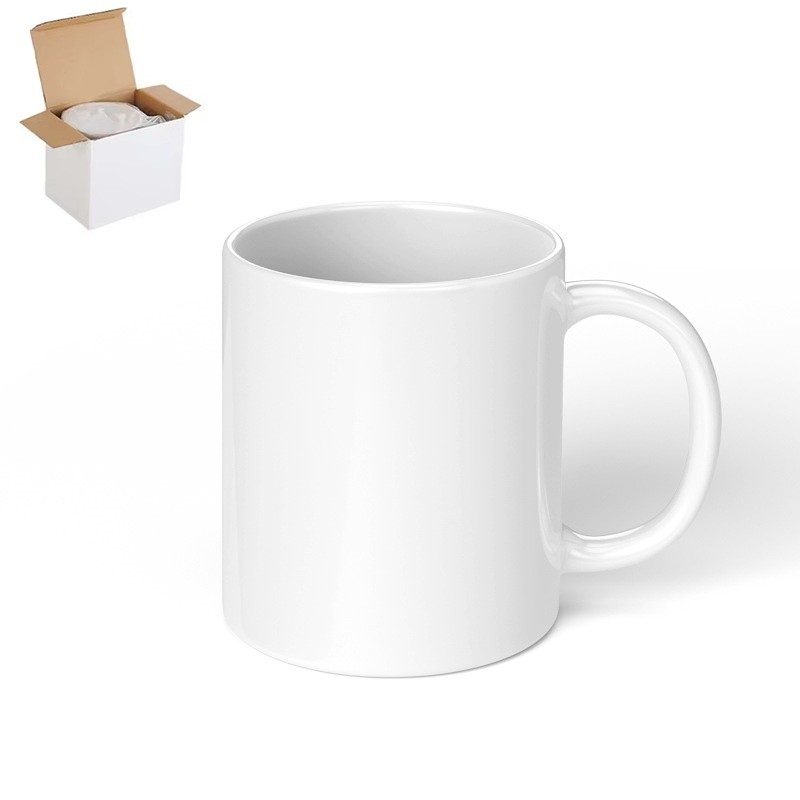
11oz Sublimation Blank Ceramic Mug
The standard blank ceramic mug perfect for custom decoration projects. Ideal for silk screen printing, sublimation, and ceramic decal. Minimum order quantity: 5,000 pieces per design.
View Product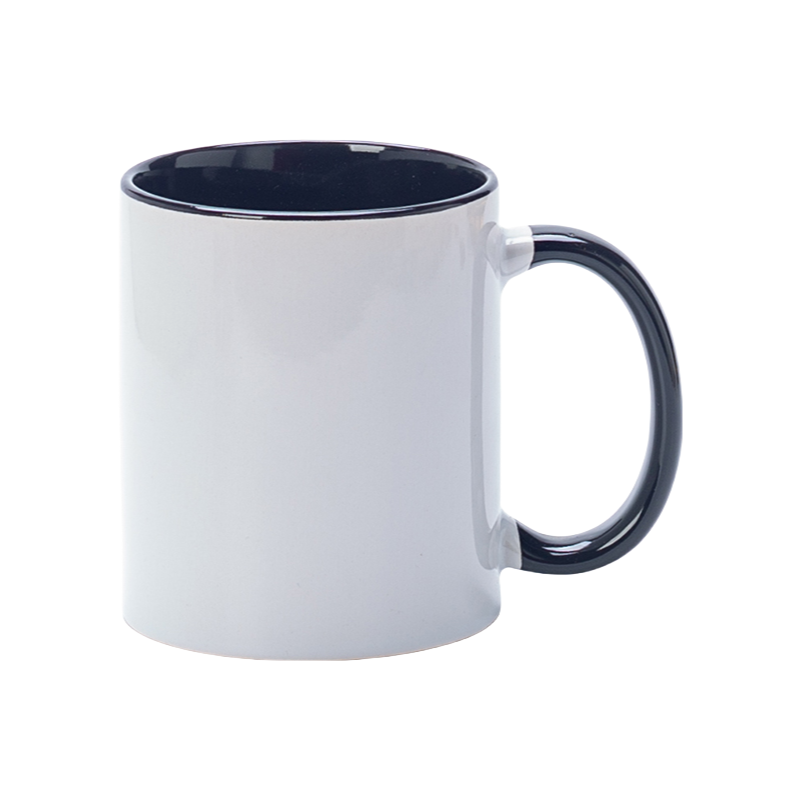
11oz Sublimation Color Handle Mug
A stylish color handle mug offering additional customization options. Perfect for coffee shops, cafes, and branded merchandise. Minimum order quantity: 5,000 pieces per design.
View ProductNot Sure Which Printing Method to Choose?
Contact Storiware today for a free consultation and personalized quote. Our manufacturing experts will help you select the best printing method for your custom mug project based on your design requirements and budget.
Get a Free QuoteThis article is for informational purposes only. Product specifications, production timelines, and pricing are subject to change based on order volume, design complexity, and current factory capacity. Please contact Storiware for a current quotation and production schedule.