Custom Mugs for Coffee Shops: A Barista-Friendly Buying Guide
- Share
- Issue Time
- Aug 4,2026
Summary
A practical guide to buying custom mugs and cups for coffee shops: cup sizes for every drink, wall thickness and heat retention, handle design for baristas, stackability, dishwasher durability, branding, and the decoration choices that keep latte art looking great.

Custom Mugs for Coffee Shops: A Barista-Friendly Buying Guide
A coffee shop's cups are the most used and most seen object in the business. Every drink is served in them, every customer holds them, and every photo of your coffee features them, yet many shop owners choose cups by looks alone and discover too late that the cups are too thin for the espresso machine, too hot to hold, too hard to stack, or too fragile for the dishwasher. This guide covers everything a coffee shop owner or operator needs to specify when buying custom mugs and cups: the sizes for each drink, the wall and heat behavior, the handle design that baristas actually appreciate, the stacking and dishwasher realities, the branding that makes the cup part of the experience, and the decoration choices that keep the latte art visible and the logo sharp.
Size the Cup to the Drink
The cup menu of a coffee shop is defined by the drink menu, and the sizes must match the recipes exactly. Espresso drinks need small cups: a 60 to 90 ml espresso cup for a single shot and a 150 to 200 ml cappuccino or flat white cup for milk-based espresso. Filter coffee, Americanos, and tea need larger cups, typically 250 to 350 ml, and to-go and large latte sizes run from 350 to 500 ml. If your menu uses a standard size for everything, you are over-serving or under-serving at least one drink, and every over-serve is a margin leak multiplied by hundreds of drinks a day.
Two sizing details matter beyond the capacity. First, specify the fill line or the usable capacity rather than the brim capacity, so the barista knows exactly how much to pour for a consistent drink every time. Second, check the diameter against the espresso machine and the milk jug: a cup that is too wide for the group head or too small for the pitcher makes service slower and messier. Consistency across the batch matters too, because customers notice when one cup of the same size holds visibly less than another.
Wall Thickness and Heat Retention
The wall of the cup controls the two things customers feel immediately: how hot the drink stays and how hot the cup gets in the hand. A thin-walled cup cools the drink quickly and burns the fingers, which is why cheap cups ruin the experience of good coffee. A well-designed cup has walls thick enough to insulate the hand while the coffee stays hot, and the thickness should be matched to the drink: espresso cups need enough mass to hold heat through a short drink, while filter coffee cups benefit from walls that keep a larger volume warm for longer.
The body material drives the heat behavior as much as the wall. Stoneware retains heat best and feels warm and solid, porcelain balances heat and weight, and bone china is elegant but conducts heat quickly. For a shop that serves drinks to customers who hold the cup while standing or walking, prioritize heat retention and comfortable handling, and confirm the behavior with a physical sample rather than assuming the catalog photo tells you anything about temperature.
Handles That Work for Baristas
The handle is the part of the cup the barista touches constantly, and it deserves more thought than its size suggests. A barista lifts, carries, and passes cups dozens of times an hour, often with several cups in one hand, and the handle design determines whether that work is comfortable or exhausting. A handle that fits two or three fingers comfortably, with enough depth to hold a full cup securely, is the practical standard. The angle of the handle matters for stacking and for the grip when the cup is full, and the handle must be strong enough to survive the stress of a full cup and the dishwasher.
If your baristas carry multiple cups per trip, consider cup shapes and handle designs that support two-finger and three-finger carries. Some operators prefer handles on cups above a certain size and handle-less cups for small espresso sizes, where the cup sits on a saucer and is lifted by the rim. Whatever the design, the handle should be tested by the people who will actually use it, because a handle that looks fine in a sample photo but feels awkward after an hour of service is a daily cost you will not see on the invoice.
Stacking and Dishwasher Durability
Coffee shop cups live a hard life: stacked on the machine, racked in the dishwasher, knocked together, and dropped. Three specifications keep them alive. First, stacking: cups designed to nest stack safely on the machine and pack efficiently in storage, and the nesting geometry should be confirmed with a sample. Second, the rim: a rounded, thickened rim resists the chips that sharp edges suffer, and the rim is where cups fail most often. Third, thermal shock resistance: a cup that can swing from the hot group head to a cold rinse without crazing or cracking will survive a busy service, and the factory should provide thermal shock data for the specific body and glaze.
The dishwasher is the other stress test. Commercial dishwashers run hot detergents at high temperature, and cups cycle through them constantly, so the glaze must resist staining, scratching, and chemical attack, and the decoration must survive hundreds of washes without fading. When you evaluate samples, ask for the decoration's dishwasher durability and, if possible, run a sample through your own machine, because the printed logo is part of the brand, and a logo that fades after a month of washing is a brand failure printed on every cup.
Branding and the Cup as Experience
The cup is a daily, physical touchpoint with your brand, and it deserves the same design attention as your logo and your signage. The logo belongs on the side of the cup where the customer holds it least, usually the front face or a small mark near the base, and the inside of the cup matters too: many specialty shops put a small logo or a message in the bottom of the cup, visible only as the drink is finished, which creates a small moment of delight that customers photograph and share.
The color of the cup is a brand decision as much as a decoration decision. A white cup shows the coffee itself, and for latte art programs the white or cream interior is essential, because dark interiors hide the pattern. A colored cup, whether a full color, a colored band, or a colored handle, carries the brand palette and stands out in photos, but it changes how the drink reads and how the interior should be specified. If latte art is part of your service, keep the interior light and confirm that the interior glaze is smooth and bright.
Printing and Decoration for Cafe Cups
The decoration on cafe cups must do double duty: look sharp under the cafe lights and survive hundreds of dishwasher cycles. Silk-screen printing gives crisp, durable single-color and two-color logos at the best cost, which is why it is the standard for cafe branding. Ceramic decals handle full-color artwork, gradients, and fine detail, and they are the right choice when the logo is complex or photographic. For white cups with photographic designs, sublimation offers seamless wraps, but it requires a coated white surface and is less durable under heavy commercial washing, so it suits lower-turnover environments.
Whatever the method, the printable area must be defined against the actual cup geometry, because the curve of the cup distorts artwork near the edges and the handle area cannot be printed. Confirm the printable zone with the factory, approve a physical print sample, and keep it as the reference for the production batch. For a shop that plans to reorder cups as part of an ongoing program, the approved sample is also the anchor that keeps every future order consistent.
Sourcing and Reordering for the Long Run
Coffee shops reorder cups continuously, so the sourcing plan should be built for repeat orders, not a one-time buy. Consolidate your cup program: espresso cups, cappuccino cups, and filter coffee cups in one body, glaze, and decoration program, sharing setup and screens across the range, which both lowers the per-piece cost and guarantees the tabletop matches. Reserve a sensible safety stock, because a broken cup is a daily event in service and a shop without backup cups serves the wrong cup in front of customers. And reorder early enough that the lead time, fifteen to twenty-five days of production plus shipping, never threatens your inventory.
Build the relationship with the factory like a partnership, because a cup program is a living product that changes with your menu. When you add a drink, add a cup size and match it to the existing program. When you refresh the brand, update the decoration against the same body. The supplier that knows your program can quote faster, match colors better, and catch problems earlier, and that relationship is worth more over the life of the shop than any saving on a single order.
Conclusion: Cups That Serve the Coffee and the Brand
The right cups for a coffee shop are the ones that match the drink menu, keep the coffee hot without burning the hand, work comfortably for baristas, survive the dishwasher and the stack, and carry the brand with care. Size each cup to the drink, choose a wall and body that retain heat, design the handle for the people who carry it, specify the rim and thermal behavior for service, protect the latte art with a light interior, and print the logo to survive the washes. Cups chosen this way serve the coffee, the staff, and the brand, at every service of every day.
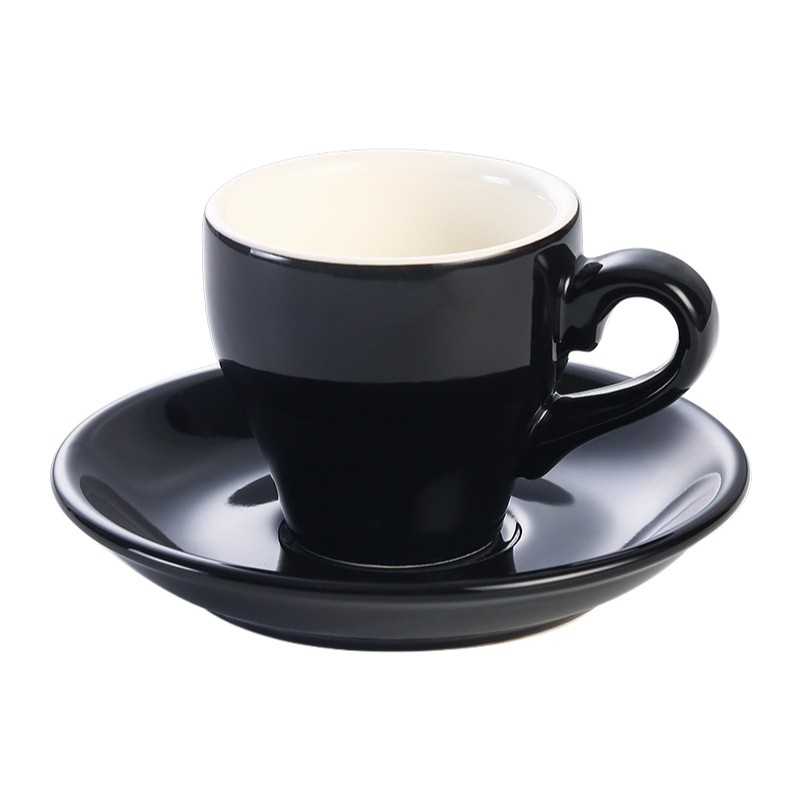
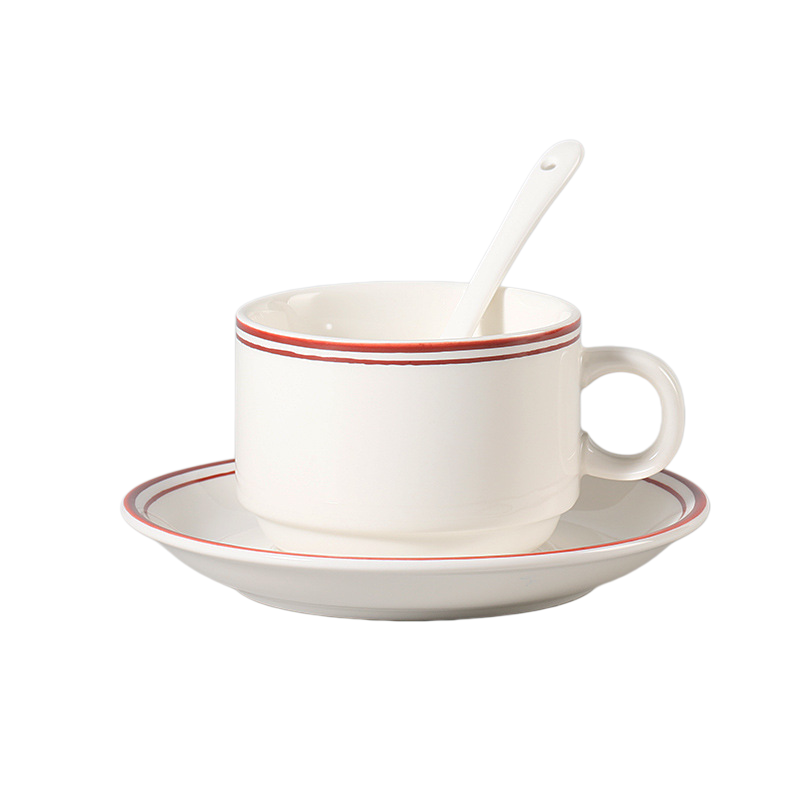
Looking for cups that work as hard as your baristas? Storiware customizes mugs, coffee cups, and espresso cup sets for coffee shops worldwide, with heat-retentive bodies, barista-friendly handles, dishwasher-durable decoration, and physical sampling before production. The featured cups below are a great starting point, and our team will help you build the cup program that fits your menu.
Featured Coffee Mugs from Storiware
Explore products featured in this guide:
Need a custom quote? Send an inquiry or browse our full product catalog.