Ceramic Bowl Sourcing & Customization Guide for Food Service
- Share
- Issue Time
- Aug 4,2026
Summary
A complete buying guide for custom ceramic bowls: bowl types for every dish, size and capacity, body materials, glaze safety, stacking and durability, customization options, MOQ, and sourcing tips for restaurants, food service, and importers.

Ceramic Bowl Sourcing & Customization Guide for Food Service
Bowls are the most versatile piece of ceramic tableware in food service. The same kitchen that serves ramen in a deep noodle bowl serves rice in a compact rice bowl, salad in a wide salad bowl, soup in a rounded soup bowl, and dessert in a small sweet bowl, often in the same service. Each of those bowls has a different geometry, a different capacity, and a different job, and choosing them correctly affects portion control, dishwashing efficiency, stacking, and the overall look of the tabletop. This guide walks through everything a restaurant, cafe, caterer, or wholesale buyer needs to specify when sourcing custom ceramic bowls: the bowl types, sizes and capacities, body materials, glaze safety, durability, customization, and the sourcing decisions that keep the program profitable.
Match the Bowl Type to the Dish
The bowl family is defined by what it holds, and the biggest sourcing mistake is buying one generic bowl shape for every dish. Soup bowls have a rounded, deep profile that holds liquid comfortably and keeps it warm; a shallow bowl is a poor soup bowl because it cools quickly and spills at the rim. Rice bowls are small and compact, sized for a single serving of steamed rice, and they sit easily in the hand or in a stacked rack. Noodle bowls, including the popular ramen bowl, are the deepest and largest, designed to hold broth, noodles, and toppings in one generous portion. Salad bowls are wide and shallow, giving the greens room to breathe and the dressing room to coat without pooling. Dessert bowls and snack bowls are small and often decorative, and kids' bowls are sized and weighted for small hands.
Write down the menu items that will actually be served in bowls before you order, and map each one to the correct bowl type. A menu built around soups and noodles needs a different bowl program than a cafe built around salads and rice bowls, and the difference shows in portion control, storage, and customer perception. The factory's catalog will have a bowl for every job; your job is to match the job to the bowl before you match the bowl to the color.
Size, Capacity, and Portion Control
Bowl capacity is measured in milliliters or fluid ounces, and it directly controls portion size, which means it directly controls your food cost. A soup bowl that holds 350 ml looks different from one that holds 500 ml, and if your kitchen's recipe is portioned for one, the other will either over-serve or under-serve. Standard soup bowls commonly range from 300 ml to 550 ml, rice bowls from 150 ml to 250 ml, noodle bowls from 700 ml to 1200 ml, and salad bowls from 500 ml to 900 ml, with dessert bowls at 120 ml to 250 ml.
Two practical notes on capacity. First, specify the usable capacity, the amount the bowl holds comfortably without spillage, rather than the brim capacity, and write it into the spec so there is no ambiguity with the factory. Second, check the diameter and depth together, not just the volume: a wide shallow bowl and a narrow deep bowl can hold the same volume but behave completely differently in the hand, on the table, and in the dishwasher rack. Consistency across the batch matters too, because portion control fails when bowls in the same stack vary in capacity.
Body Materials: What Each Bowl Needs
The ceramic body of a bowl determines its weight, thermal retention, and strength, and the choice should follow the bowl's job. Porcelain is the professional default for most food service bowls: dense, smooth, strong, and available in clean white finishes that present food well. Stoneware bowls are heavier and more rustic, with a natural, artisanal character that suits casual, specialty, and ramen concepts, and they retain heat particularly well, which is a real advantage for soup and noodle service. Bone china bowls are lighter, whiter, and more translucent, which reads as premium in fine dining, but they are more fragile and more expensive. Reinforced or hotel-grade porcelain is engineered for high turnover and heavy dishwashing, and it is the right choice for cafeterias, institutional service, and any operation where bowls cycle through the dishwasher constantly.
Thermal retention deserves special attention for bowls. A ramen or soup bowl that does not retain heat makes the dish taste wrong, no matter how good the recipe is. Stoneware and thick-walled porcelain bowls hold heat far better than thin bone china, which is why serious noodle shops choose thick stoneware bowls even though they weigh more and cost more to ship. If heat retention matters for your menu, specify a thicker wall and a body with higher thermal mass, and confirm the behavior with a physical sample before committing to volume.
Glaze Safety and the Interior
The interior of a bowl is in direct contact with hot, acidic, and often high-fat food, which makes the glaze the most safety-critical part of the product. Every bowl that touches food must meet the food-contact requirements of your target market, with lead and cadmium migration within the allowed limits, and the certification must be product-specific, covering the exact glaze and decoration of the exact bowl you are ordering.
Beyond safety, the interior glaze affects the eating experience and the product's lifespan. A fully glazed interior is standard for easy cleaning and hygiene, and a smooth, dense glaze resists the staining and scratching that make white bowls look worn. Some specialty bowls use a contrasting interior glaze, which can look striking but must be chosen carefully because the color of the interior affects how the food is perceived. The unglazed exterior base, common on stoneware, should be smooth and well fired so it does not scratch counters or absorb water during dishwashing cycles.
Stacking, Handles, and Durability in Service
Bowls face mechanical stress that plates and mugs rarely see: they are stacked in tight racks, lifted by the rim with one hand, and subjected to the thermal shock of hot soup hitting a cold bowl. Three specifications determine how they survive. First, stacking: bowls designed to nest together stack more safely and pack more efficiently in the kitchen and in the shipping carton, and the nesting geometry should be confirmed with a physical sample. Second, the rim: a rounded, thickened rim is far less likely to chip than a sharp edge, and the rim is where bowls fail most often. Third, thermal shock resistance: a bowl that can handle the swing from a hot holding cabinet to a cold counter, or from the dishwasher to the pass, will survive a commercial kitchen, and the factory should provide thermal shock test data for the specific body and glaze.
Handles are less common on bowls than on mugs, but they appear on some large soup and noodle bowls, where two small side handles make a full bowl easier to carry. If your menu uses large handled bowls, confirm that the handles are strong enough for a full load and that they do not interfere with stacking or dishwasher racks. For kids' bowls, weight and stability matter more than capacity, and a weighted base that resists tipping is a genuinely useful feature for children's service.
Customization and Branding
Custom bowls are a visible part of the dining experience, and they carry the same branding opportunities as mugs and plates, with a few bowl-specific details. The exterior wall of a bowl is the natural place for a logo or decorative band, and the bottom is an underused canvas for a hidden brand mark or a menu code. Silk-screen printing suits simple logos and bands at the best cost, ceramic decals handle full-color artwork, and hand-painted finishes belong to the premium range. On bowls with a footring, confirm that the decoration does not interfere with stacking, because a thick decal on the exterior can make nested bowls stick together.
Color consistency is as important on bowls as on any tableware, and the discipline is the same: send your color references, approve a physical sample, and keep the sample as the benchmark for the production batch. For food service, the interior color also needs approval, because a bowl that looks right on the outside but dull on the inside changes how every dish reads. If your brand uses a specific glaze or finish, ask the factory to match it against a sample before production rather than assuming the digital preview is accurate.
Sourcing, MOQ, and Packaging
Bowls are heavy relative to their value, so freight and packaging deserve the same attention as the product itself. Ask the supplier for the container loading quantity for your specific bowl sizes, and compare nesting and packaging options, because a bowl that nests efficiently ships at a materially lower per-piece cost. Packaging should separate each bowl with adequate protection, especially for deep bowls where the rim is exposed to impacts during transit.
MOQs for custom bowls typically start around 3,000 to 5,000 pieces per design, and the professional approach is to consolidate the bowl program: order the soup, rice, noodle, and salad bowls together under one body and glaze specification, sharing screens and setup costs across the range. This also gives you a consistent tabletop, which is a brand benefit as much as a cost benefit. Lead time follows the standard ceramic structure of design, sampling, production, and shipping, and the same discipline of samples, inspection, and approved reference pieces applies exactly as it does for mugs and plates.
Conclusion: Build the Bowl Program That Serves the Menu
Bowls are not a single product; they are a family of tools, each matched to a dish, a portion, and an operation. Match the bowl type to the menu, specify the usable capacity and the diameter with the depth, choose a body that retains heat and survives the dishwasher, verify the interior glaze against food-contact standards, design the stack and the rim for service, and consolidate the program to share setup costs and build a consistent tabletop. A bowl program chosen this way controls portions, survives the kitchen, and presents the food the way the chef intends.
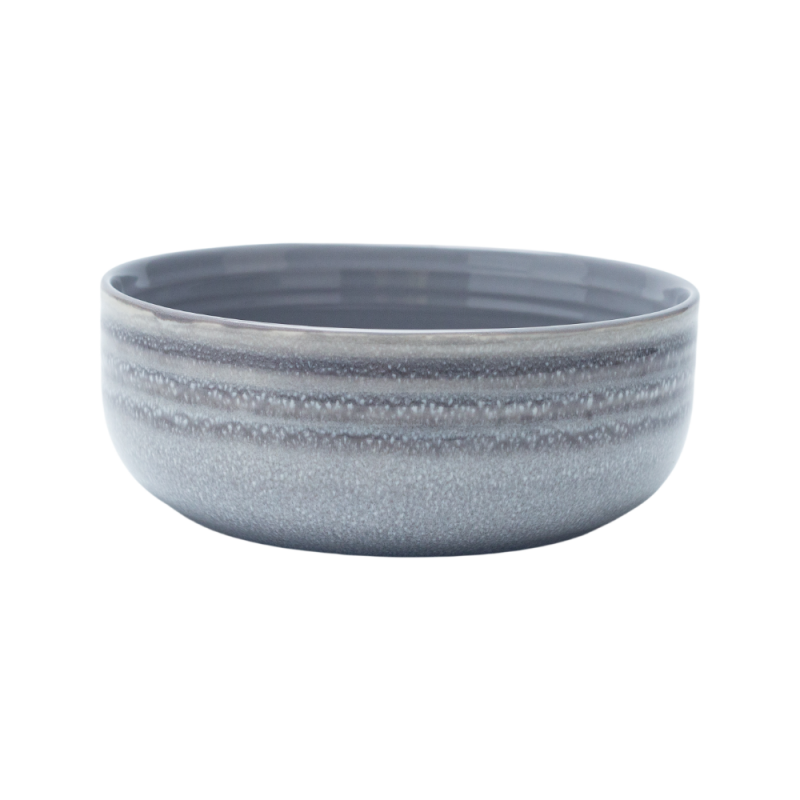
Looking for a bowl supplier that understands food service? Storiware customizes ceramic bowls for restaurants, ramen shops, cafes, and wholesale buyers, with a full range of bowl types, food-contact compliance, physical sampling, and documented quality standards. The featured bowls below are a great starting point, and our team will help you build the right bowl program for your menu.
Featured Ceramic Bowls from Storiware
Explore products featured in this guide:

Need a custom quote? Send an inquiry or browse our full product catalog.